
If a shipment leaves the country in or on solid wood, the wood has to meet ISPM 15. A crate that does not can be stopped at the destination port. Here is what the standard requires.
What ISPM 15 is
ISPM 15 is International Standard for Phytosanitary Measures No. 15, developed by the International Plant Protection Convention (IPPC). It covers wood packaging material thicker than 6 mm used to ship products between countries: crates, pallets, skids, blocking and dunnage.
The purpose is to keep insects and plant disease from travelling in raw wood.
What it requires
- The wood is debarked.
- The wood is treated. Heat treatment is the common method: a minimum core temperature of 56°C for at least 30 minutes.
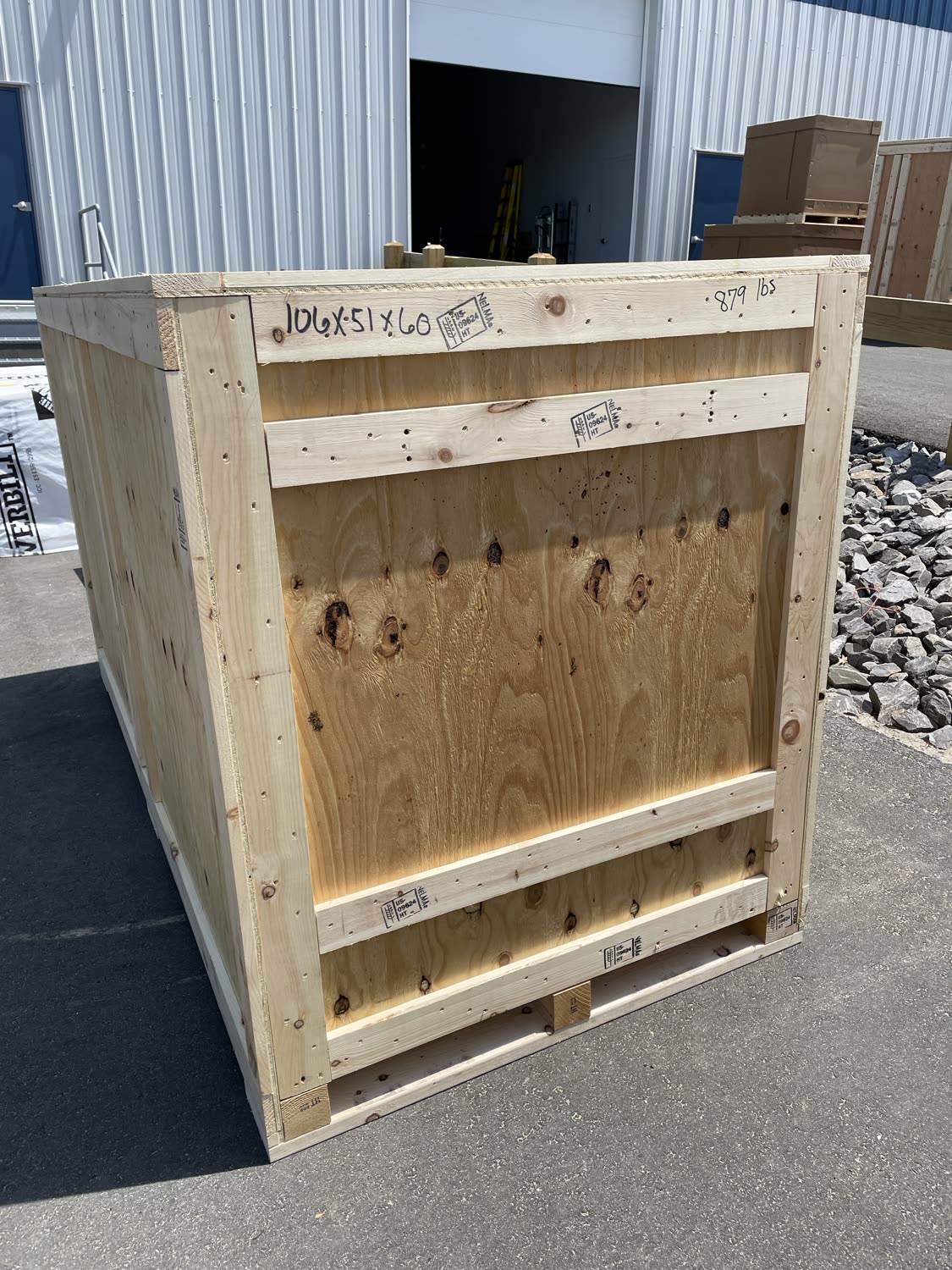
- The wood carries the IPPC mark, which shows the country code, the producer's registration number and the treatment code (HT for heat treated).
The mark has to be applied by a certified producer. It cannot be added after the fact by the shipper.
What is exempt
- Manufactured wood such as plywood, OSB and particle board, which is made with glue, heat and pressure.
- Wood 6 mm thick or less.
Most crates combine both. A plywood-sided crate still has solid lumber in the skid base, cleats and framing, and that lumber has to be treated and marked.
What happens to non-compliant wood
The importing country decides. The shipment can be held, treated at the shipper's expense, sent back or destroyed. Any of these costs more than building the crate correctly.
What to tell your crating company
- That the shipment is an export, and the destination country.
- Whether blocking, bracing or dunnage will be added inside a container. That wood has to comply too.
- Any additional packaging requirements from your customer or freight forwarder.
Sure Express Worldwide is ISPM 15 certified for wood crates. We build IPPC / ISPM 15 export crates, load containers at our dock and handle customs paperwork.
Request an export quote